
Diabetic Footcare in Burton upon Trent
Footman Podiatry proudly took on the contract from University Hospitals of Derby and Burton NHS Trust (UHDB) in 2025 to provide the specialist podiatry team to the Queen’s Hospital Burton Multidisciplinary Diabetic Foot Clinic.
This specialist work involves our podiatrists working closely with endocrinology consultants, vascular consultants, orthotists and diabetes specialist nurses.
Together, we assess, diagnose and treat some of the most vulnerable and high‑risk diabetic foot and ankle problems, including:
- Foot ulcers
- Gangrene
- Vascular (circulation) problems
- Patients before and after amputation
This level of multidisciplinary experience underpins everything we do in our clinic. It means that when you attend Footman Podiatry for a diabetic foot assessment, you are seeing a team that regularly manages the most complex and high‑risk diabetic foot conditions—making us one of the best‑placed services to assess your feet, identify problems early and help you keep them as safe and healthy as possible.
How We Assess the Diabetic Foot
At your appointment, your podiatrist will carry out a structured diabetic foot check, including:
- Medical & diabetes history – type/duration of diabetes, control (e.g. HbA1c), medications, previous ulcers/infections/amputations
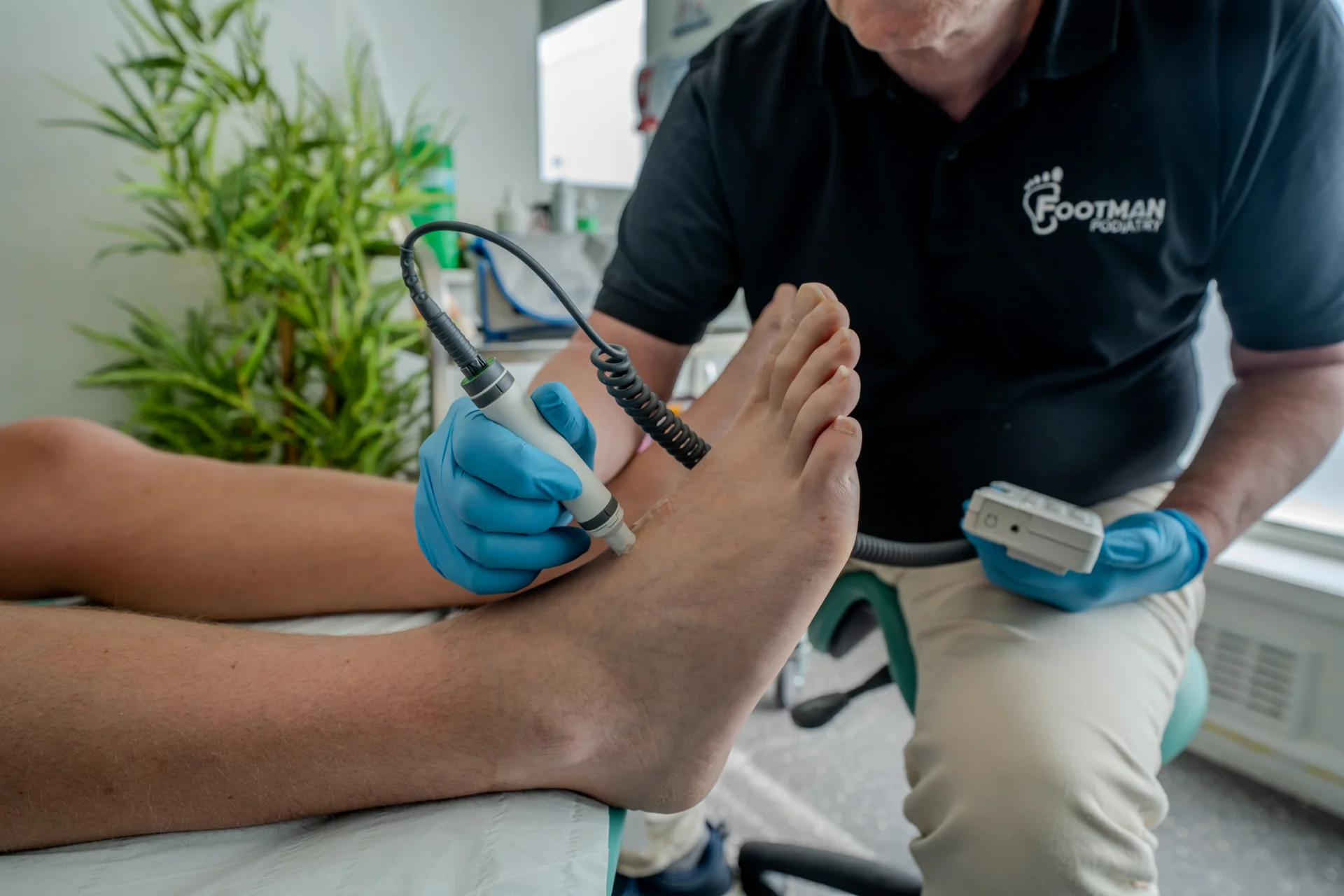
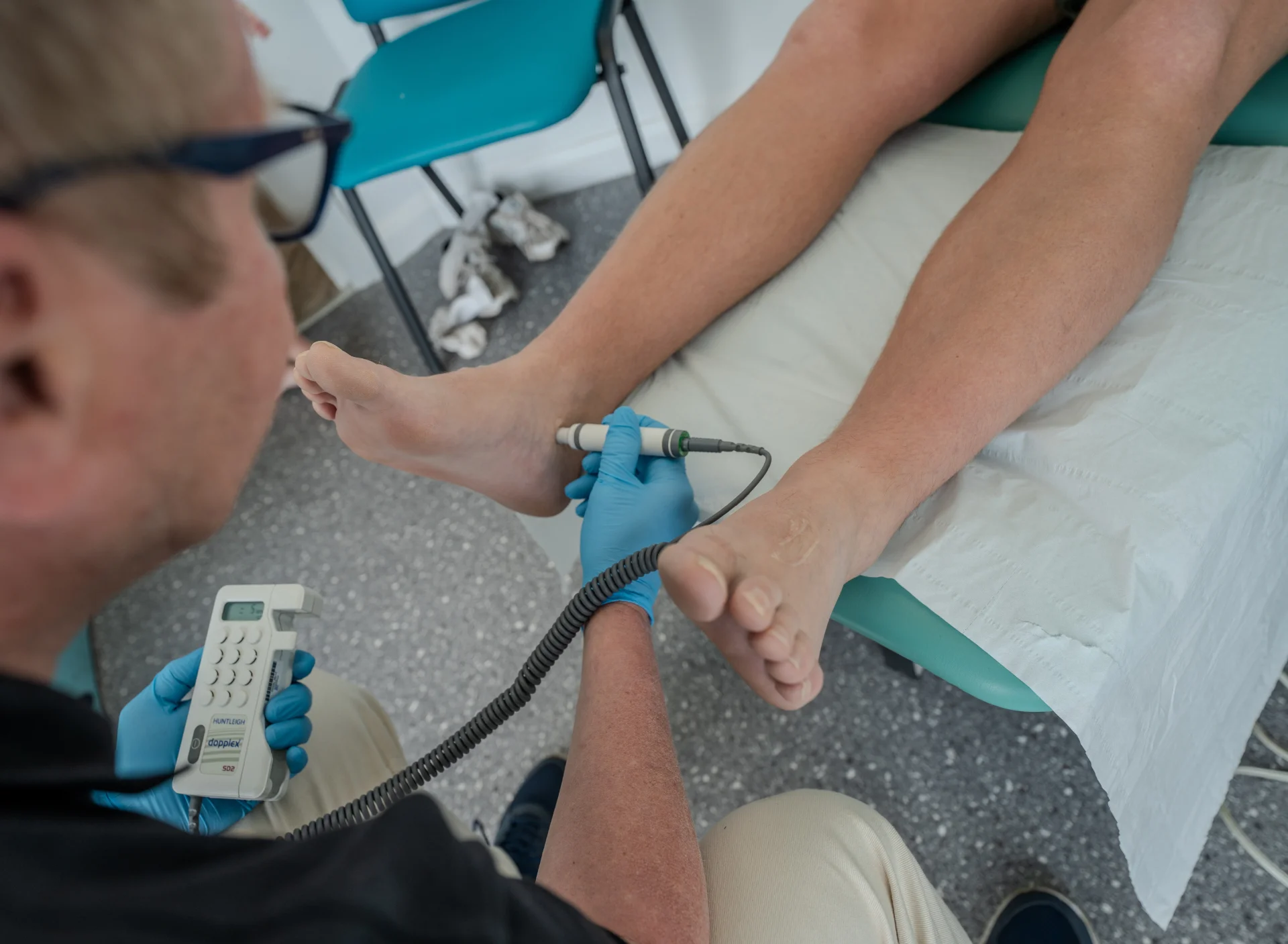
- Vascular assessment – foot pulses (often with Doppler), skin colour/temperature, signs of reduced circulation
- Neurological assessment – testing sensation (monofilament/tuning fork), checking for numbness, tingling or burning
- Skin, nail & structure check – callus, corns, cracks, fungal infection, wounds, nail problems, deformities and pressure points
- Footwear review – fit, style and wear patterns, areas of rubbing or pressure
You will receive clear feedback on your risk level (low / moderate / high) and what this means for your ongoing care.
Treatment and Ongoing Foot Care
Depending on your risk and any existing problems, we may provide:
Routine Skin and Nail Care
- Safe trimming and filing of nails (including thick or difficult nails)
- Gentle removal of callus and corns to reduce ulcer risk
- Treatment of cracked heels, dry skin and minor infections
High‑Risk Area Management & Wound Care
- Padding or dressings to protect pressure points
- Insoles, orthoses or specialist footwear to offload high‑risk areas
- Cleaning and dressing ulcers or open areas, with close monitoring
- Liaison with your GP / specialist foot team if infection or poor healing is present
Footwear, Insoles and Orthotics
- Advice on suitable diabetic footwear (e.g. extra depth, minimal seams)
- Recommendation of insoles or custom orthoses to redistribute pressure
- Periodic checks of shoe and insole wear and fit
Ongoing Monitoring
- Regular (often annual, or more frequent) diabetic foot assessments
- Routine maintenance visits for nails, callus and high‑risk areas
- Extra reviews if your diabetes control, health or mobility changes
Our focus is early detection, prevention and prompt treatment to keep you mobile, independent and safe on your feet.


