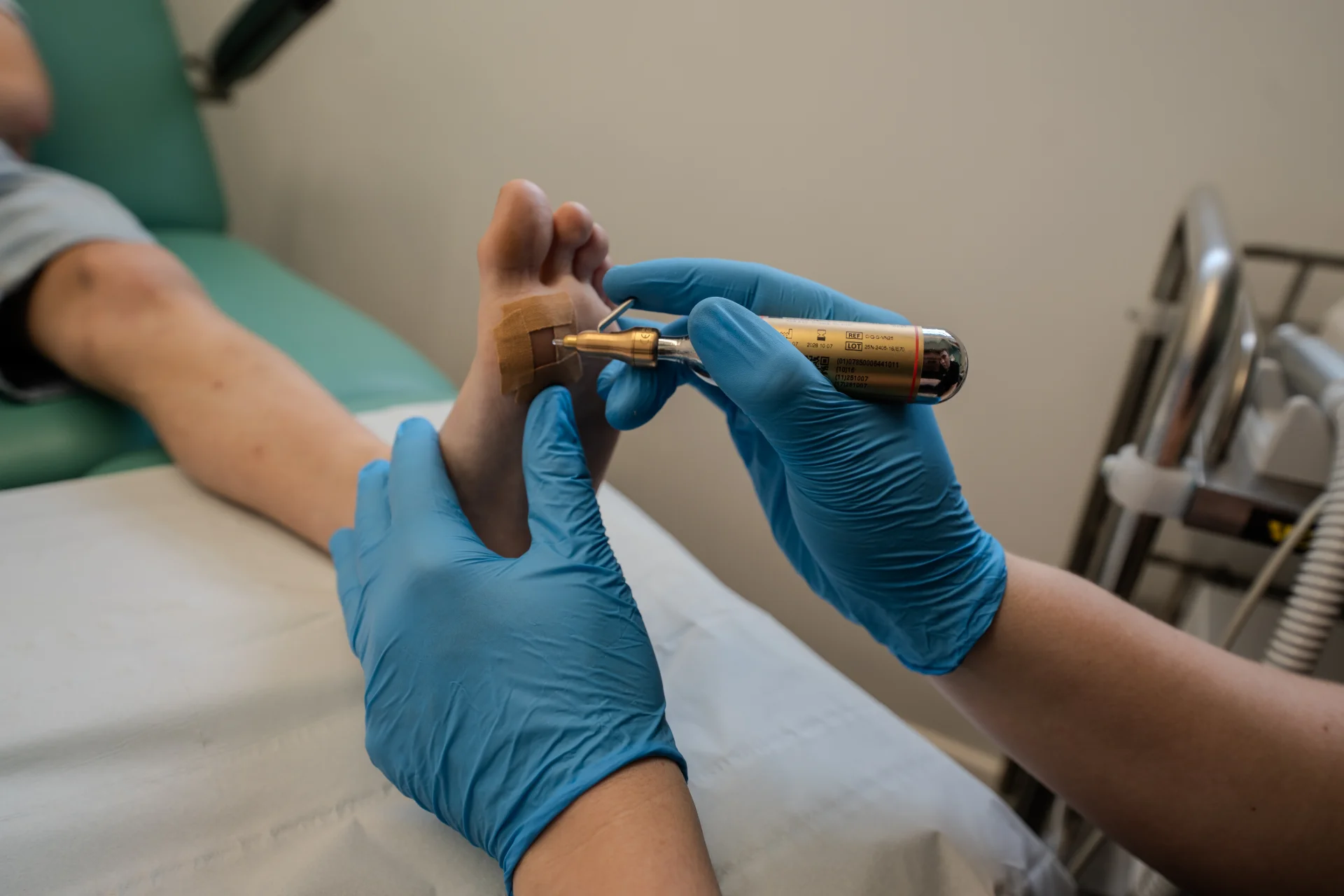
Specialist Clinical Care for Viral Skin Lesions
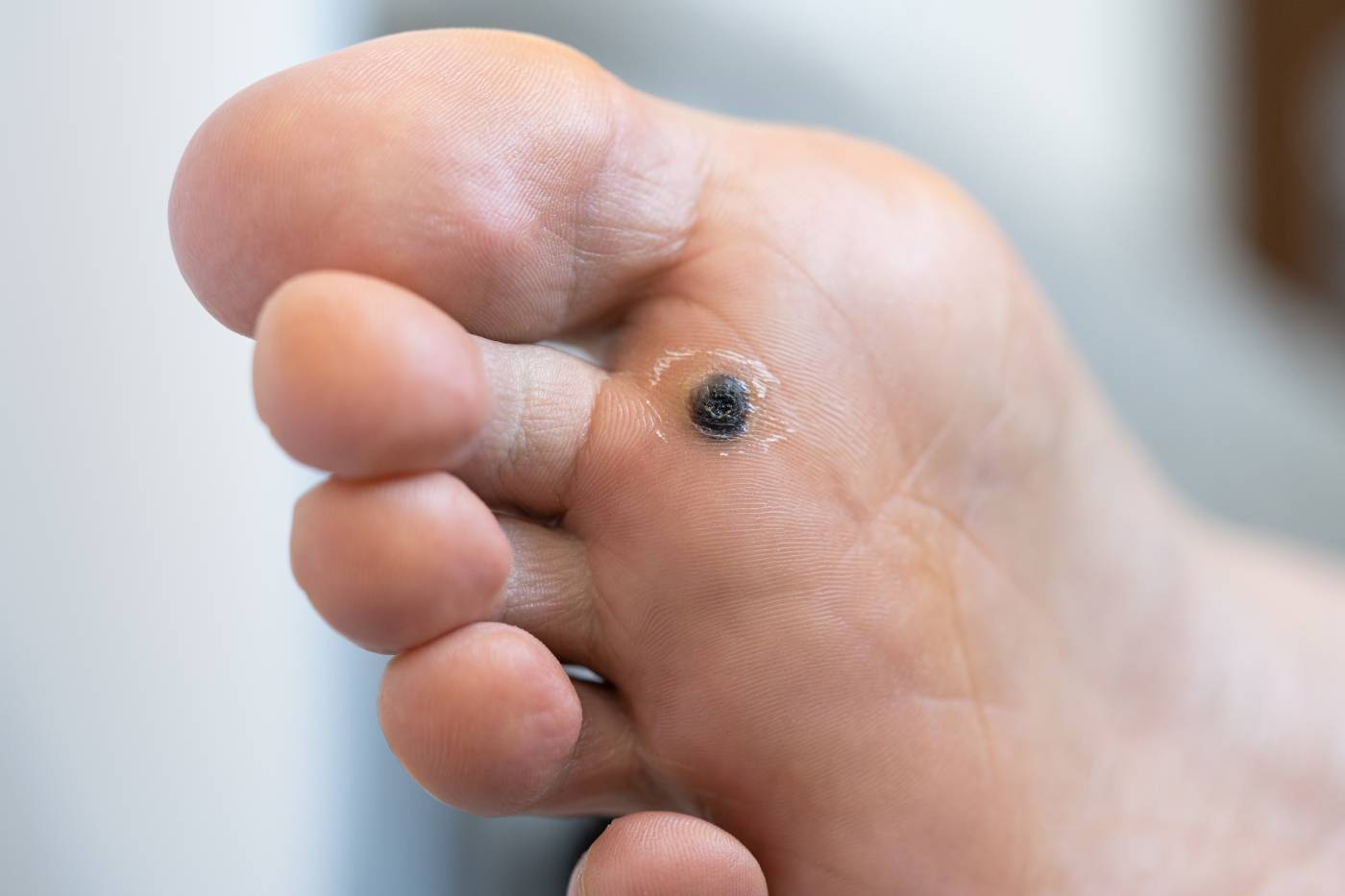
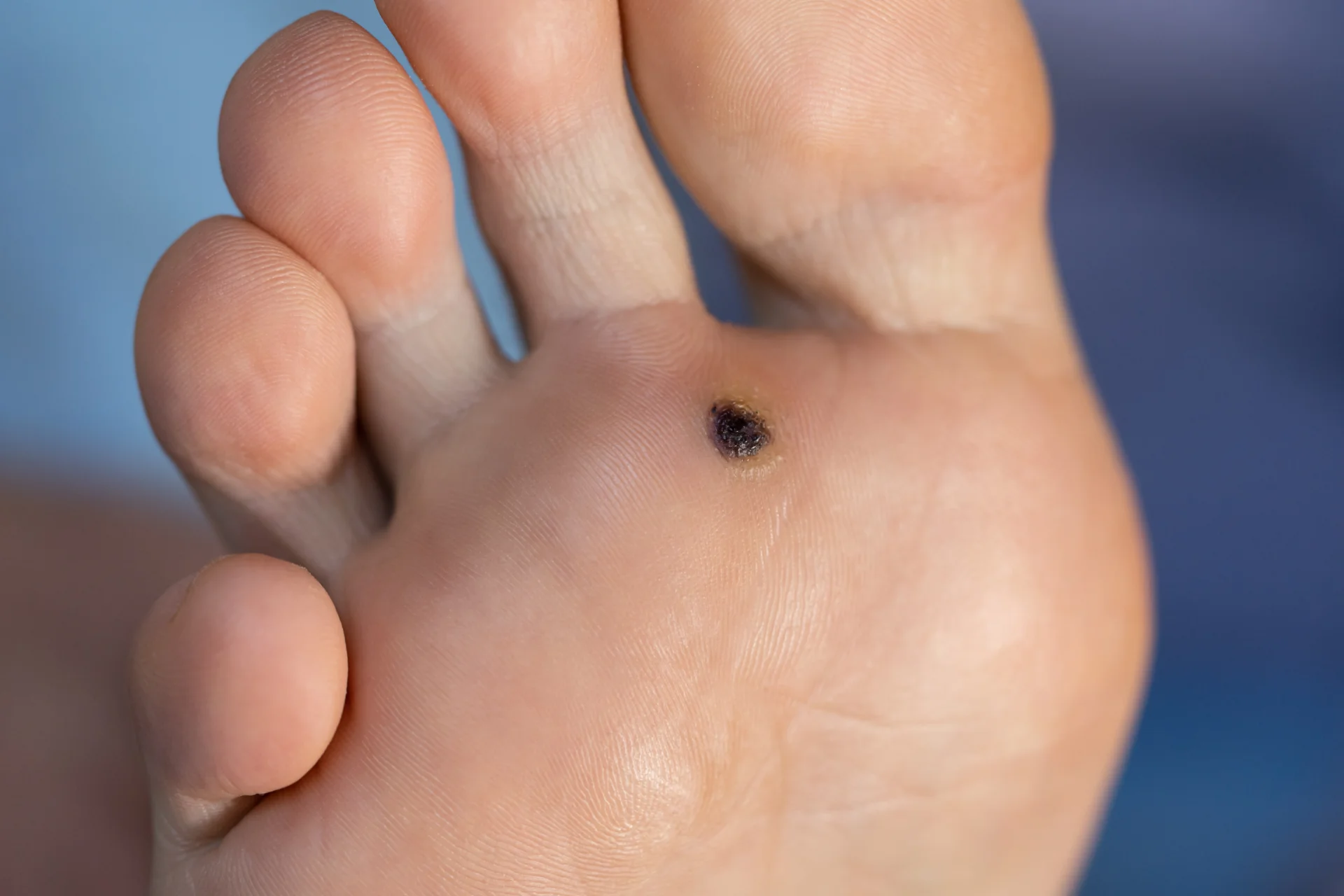
Verrucas are warts that appear on the soles of the feet or around the toes. They are caused by a viral infection (human papillomavirus – HPV) and can look like small, rough or cauliflower‑like lesions, often with tiny black dots inside. They may be painless, or feel tender and “bruised” when you stand, walk or run – especially if they are on weight‑bearing areas.
Verrucas can occur singly or in clusters and are commonly picked up in communal areas such as swimming pools, gyms and changing rooms.
How We Assess Verrucas
At your appointment, your podiatrist will:
- Examine the size, depth and location of the lesion
- Differentiate verrucas from corns or other skin problems
- Check for spread to other areas
- Ask how long it’s been present, what you’ve tried and review your general health
- Consider risks such as diabetes, poor circulation or reduced immunity
This confirms the diagnosis and guides safe, appropriate treatment.
Treatment Options
Not all verrucas need treatment, but if they are painful, persistent or spreading we may use:
Debridement (Hard Skin Reduction)
- Gently remove hard skin and bulk from the verruca
- Reduce pressure and discomfort
- Help topical treatments work better
Topical Treatments
- In‑clinic application of medicated agents such as 60% salicylic acid or Verrutop
- Advice on safe, correct use of any home treatments
- Clear guidance on realistic timeframes (often weeks to months)
Cryotherapy
- Freezing the lesion where appropriate
- Discussion of likely number of sessions, discomfort and expected results
Falkner’s Needling
- Option for stubborn or severe verrucas impacting daily life
- Performed under local anaesthetic to stimulate an immune response
- Full explanation of benefits, risks and recovery before you decide
We will explain the pros and cons of each approach so you can choose, together with your podiatrist, whether to treat actively or monitor.
Ongoing Care and Monitoring
Because verrucas can be slow to clear, we may recommend:
- Follow‑up visits to review progress and repeat/adjust treatment
- Extra monitoring if you have diabetes or poor circulation
- Advice on when it’s appropriate to stop active treatment and simply observe
Our aim is to confirm the diagnosis, relieve discomfort, limit spread and agree a clear, realistic management plan that fits your goals and lifestyle.