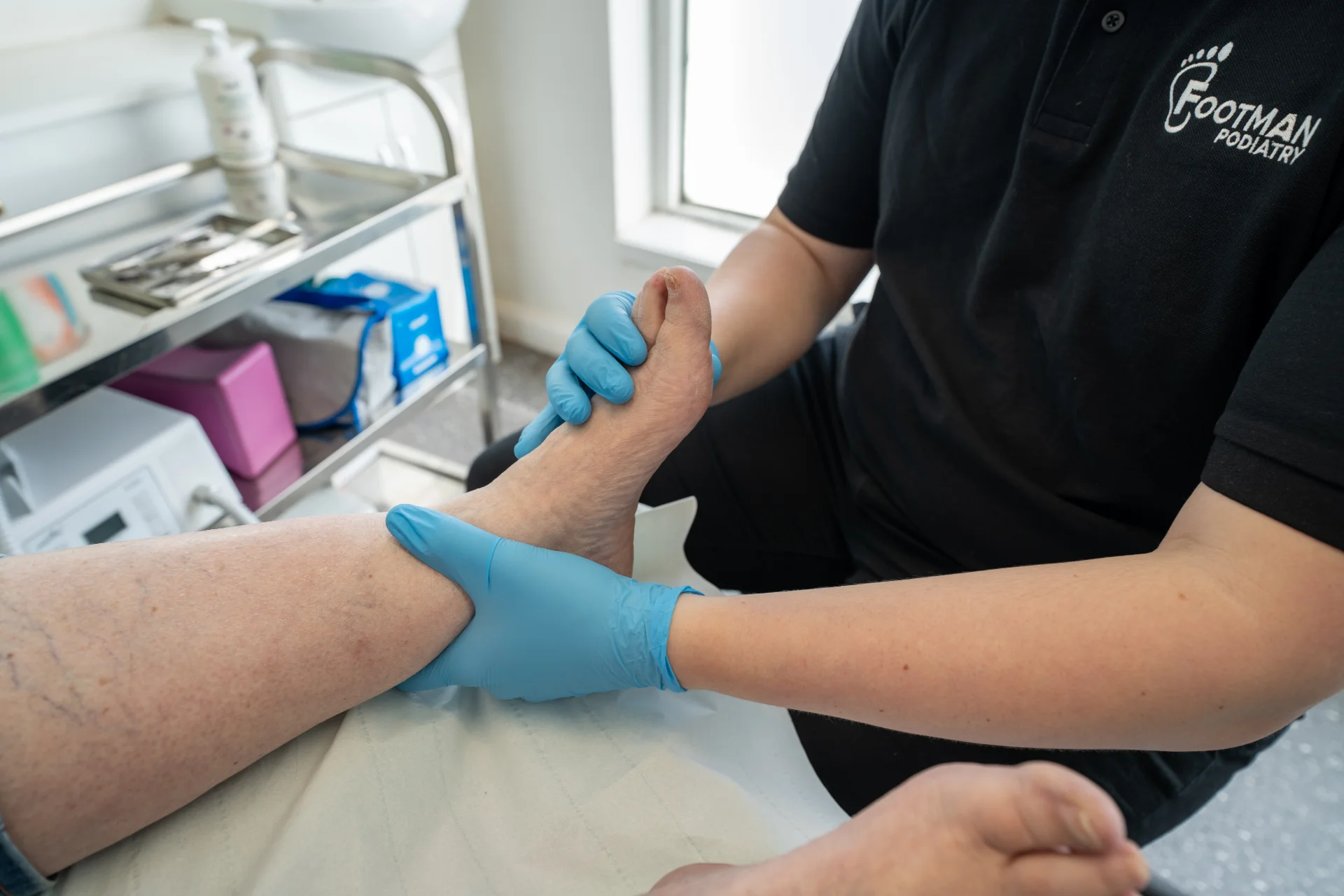
Effective Relief from Painful and Inflamed Nails
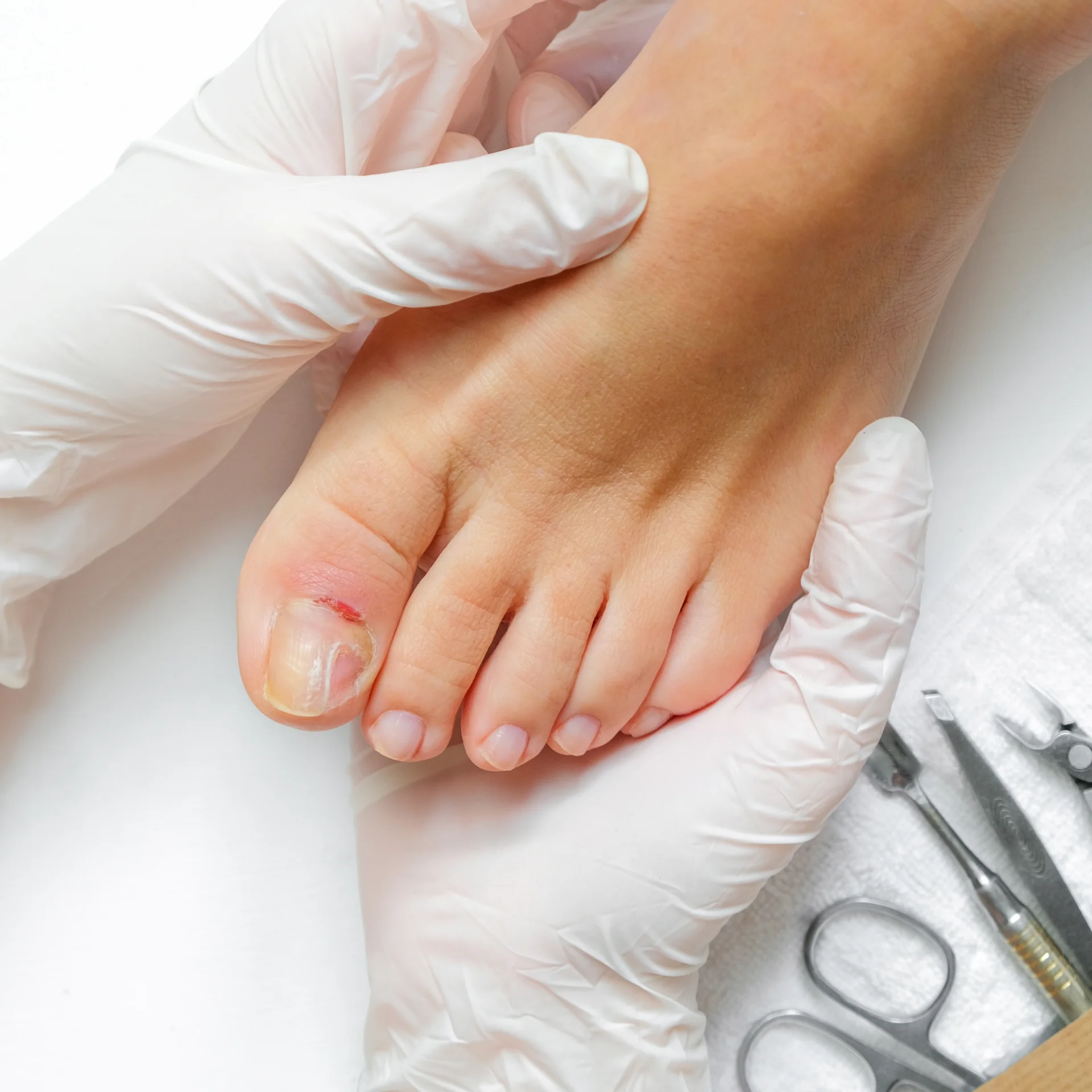
Ingrown toenails occur when the edge or corner of a nail grows into the surrounding skin. This often affects the big toe and can cause pain, redness, swelling and sometimes infection. They may be linked to nail shape, cutting technique, tight footwear, trauma or inherited nail patterns.
How We Assess Ingrown Toenails
At your appointment, your podiatrist will:
- Examine the affected toe, nail edge and surrounding skin
- Check for signs of infection (redness, heat, pus)
- Ask how long the problem has been present and any previous episodes
- Review how you cut your nails and the footwear you use
- Consider contributing factors such as foot shape, sports, trauma or medical conditions
If there is significant infection, we may advise you to see your GP for antibiotics alongside podiatry treatment.
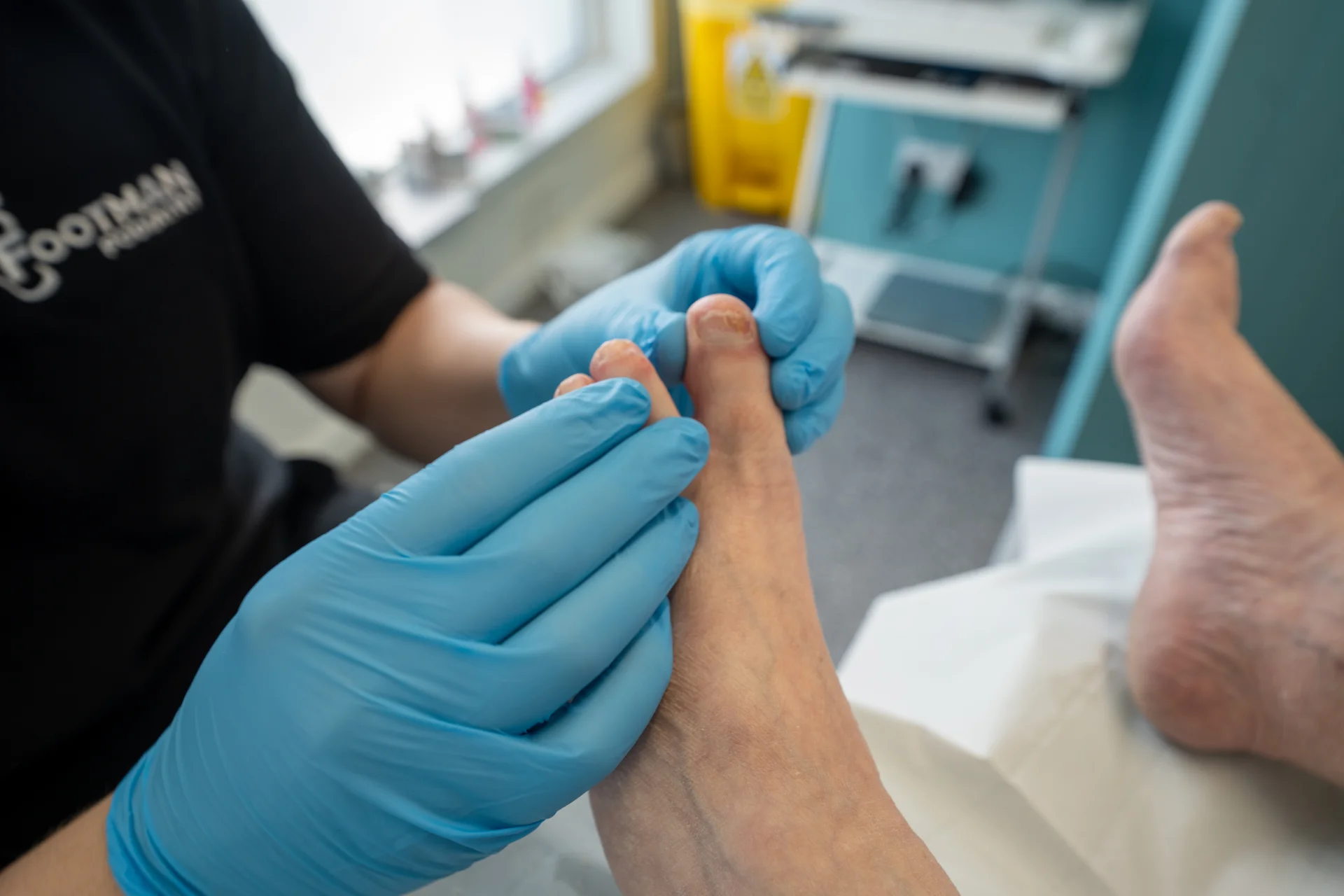
Treatment and Nail Care
We aim to relieve pain and reduce the chance of recurrence.
Conservative Nail Management
- Gently clear and lift the ingrowing edge from the skin
- Remove the small sharp spicule of nail causing pain
- Smooth and reshape the nail edge
- Clean and dress the area
Nail Surgery (If Needed)
For recurrent or severe ingrown toenails, we may recommend a minor procedure under local anaesthetic, involving:
- Removing part of the nail edge (partial nail avulsion) or, occasionally, the whole nail
- Treating the nail root with a chemical to stop that edge regrowing
- Applying a dressing and giving clear aftercare instructions
Your podiatrist will explain the procedure, benefits, risks and recovery so you can make an informed choice.
Ongoing Care and Maintenance
For those prone to recurring problems, we may suggest:
- Periodic nail cutting and shaping to keep edges safe
- Monitoring for early signs of ingrowing so we can treat them quickly
- Individualised advice if you have diabetes, poor circulation or reduced sensation
Our goal is to relieve pain quickly, reduce infection risk and keep your nails comfortable in the long term.