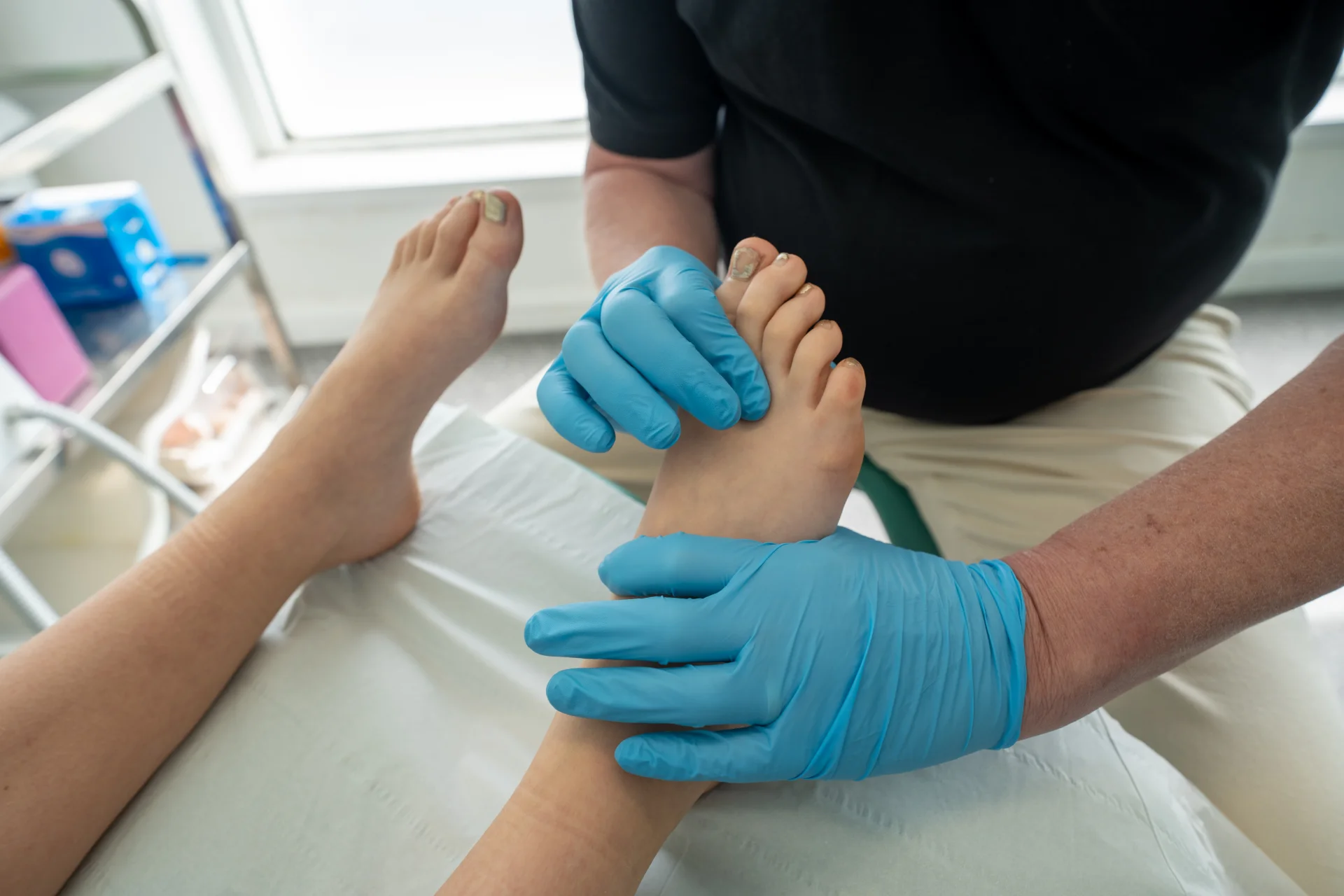
Holistic Assessment of Musculoskeletal Discomfort
Pain in the foot, ankle or lower leg can affect every step you take. It may come on gradually or suddenly, feel sharp or aching, and be linked to sport, work or simply everyday activities.
Common causes include neuromas, tendonitis / tendinopathy, arthritis in the foot or ankle joints, ligament sprains and soft tissue injuries, overuse injuries from running, walking or standing, biomechanical issues (flat feet, high arches, leg length differences).
How We Assess Foot, Ankle & Lower Limb Pain
At your appointment, your podiatrist will:
- Take a detailed history of your pain (onset, location, triggers, past injuries)
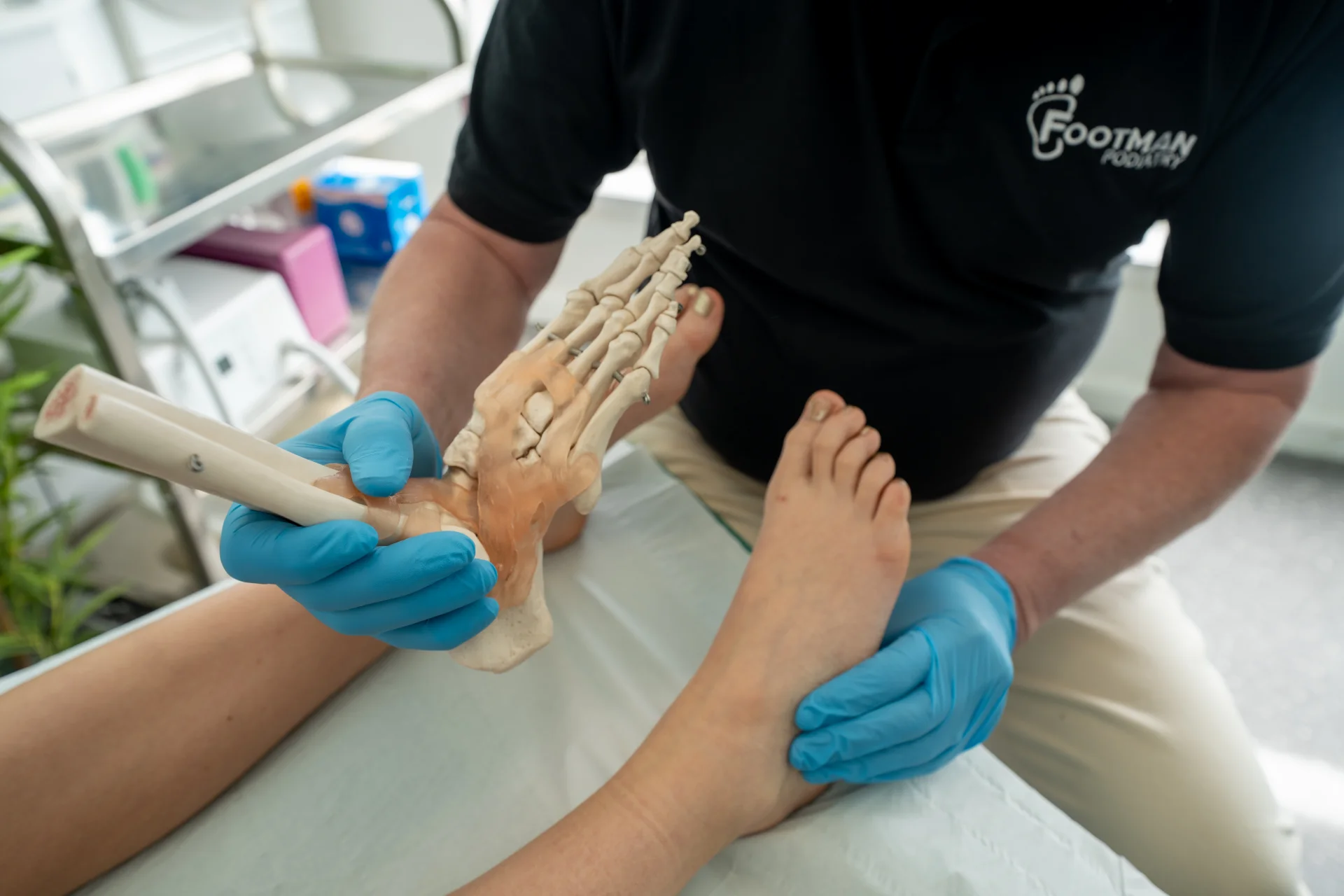
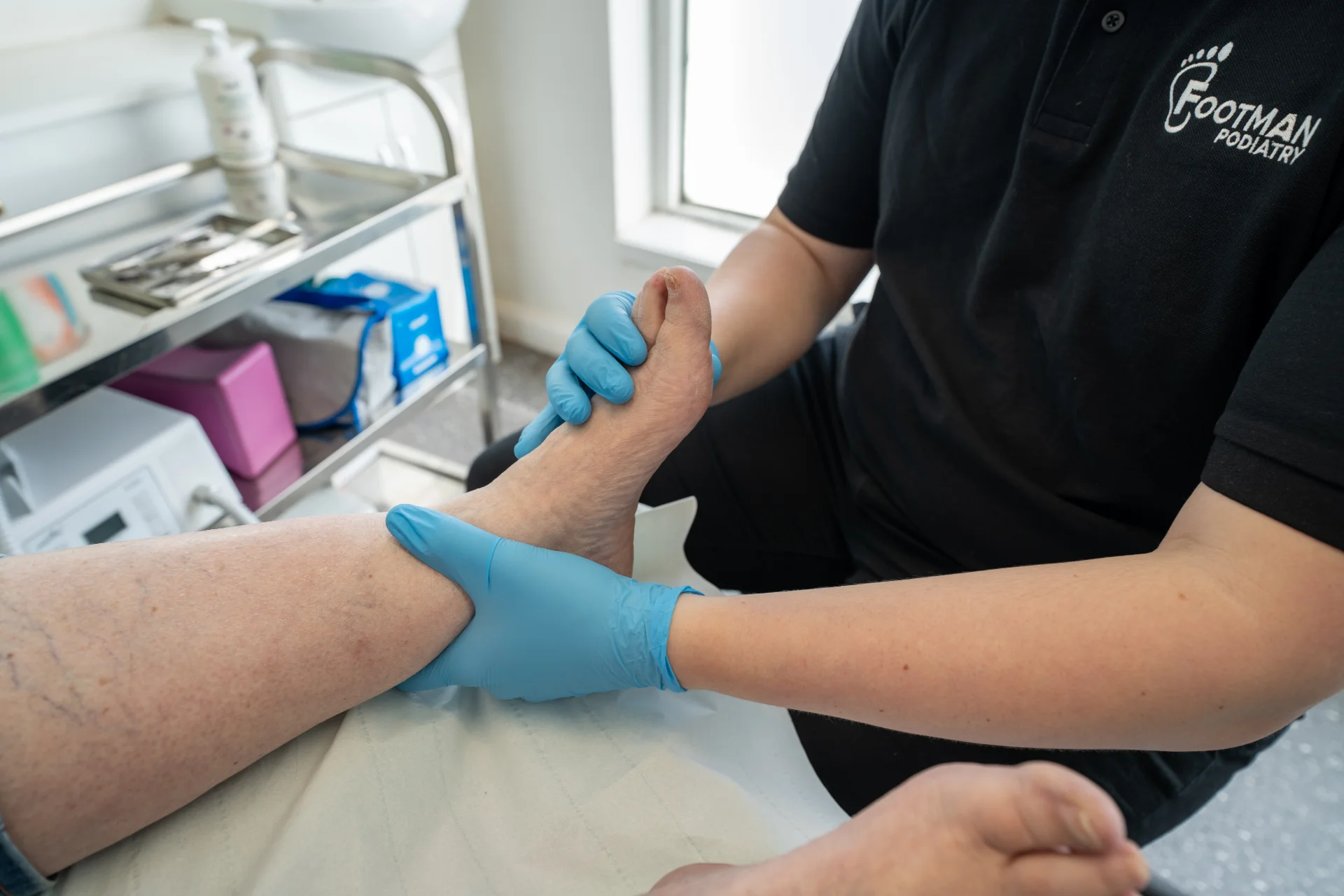
- Examine joints, muscles, tendons and ligaments in the affected area
- Gently press specific structures to pinpoint the source of pain
- Assess foot posture, leg alignment and gait using our FootScan system
- Review your footwear, activity levels, sports and work demands
- Consider your wider medical history (e.g. arthritis, diabetes, previous surgery)
Treatment and Pain Relief
Your treatment is tailored to your diagnosis and lifestyle.
Hands‑On Treatment and Support
- Taping/strapping to support painful or unstable areas
- Padding or temporary insoles to offload irritated tissues
- Advice on safe use of ice/heat and over‑the‑counter pain relief (where appropriate)
Exercise, Stretching and Rehabilitation
- Condition‑specific exercises and stretches via Physitrack, giving you a personalised digital plan
- Guidance on correct technique, frequency and progression
Orthoses and Insole Therapy
- Insoles or custom orthoses to improve alignment and reduce stress on painful structures
- Fine‑tuning for neuromas, tendon overload or arthritic joints
- Footwear advice to work alongside your orthoses
Steroid Injection (If Appropriate)
If pain is severe and affecting daily life, we may discuss a corticosteroid injection into the affected area, explaining benefits, risks and recovery so you can decide confidently.
Arthritis Management
- Cushioning, support and pressure‑redistributing devices
- Footwear advice for shock absorption and stability
- Liaison with your GP or rheumatologist where needed
Ongoing Care and Rehabilitation
Because some lower limb problems are recurrent or long‑term, we may recommend:
- Follow‑up visits to monitor progress and adjust your plan
- Ongoing progression of exercises as strength and mobility improve
- Periodic review of orthoses if your activity level or symptoms change
- Regular checks if you have arthritis, previous injuries or high activity demands
Our aim is to reduce pain, restore confident movement and provide a clear, personalised plan that supports your daily life and long‑term lower limb health.